
Explore the world · Ingredient history · Reference page
Cereals: the grasses that fed the world
Wheat and barley were brought into cultivation in the Fertile Crescent more than 10,000 years ago, maize was bred from a wild grass in southern Mexico, and millets and sorghum were domesticated in China and the African Sahel. Rye and oats began as weeds in other crops. In the twentieth century the Green Revolution tripled cereal output in the developing world, at a price.
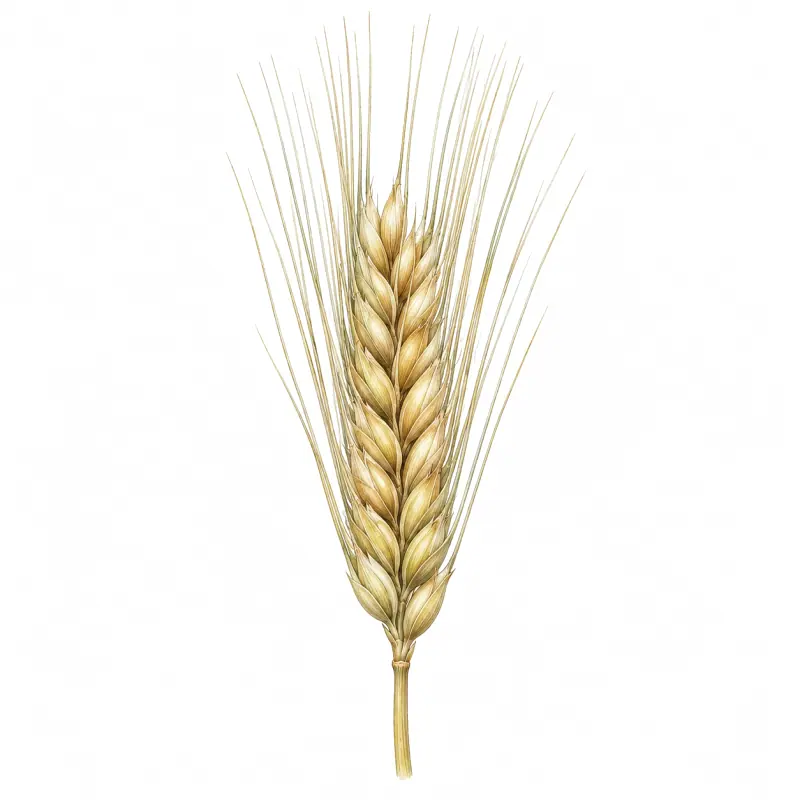
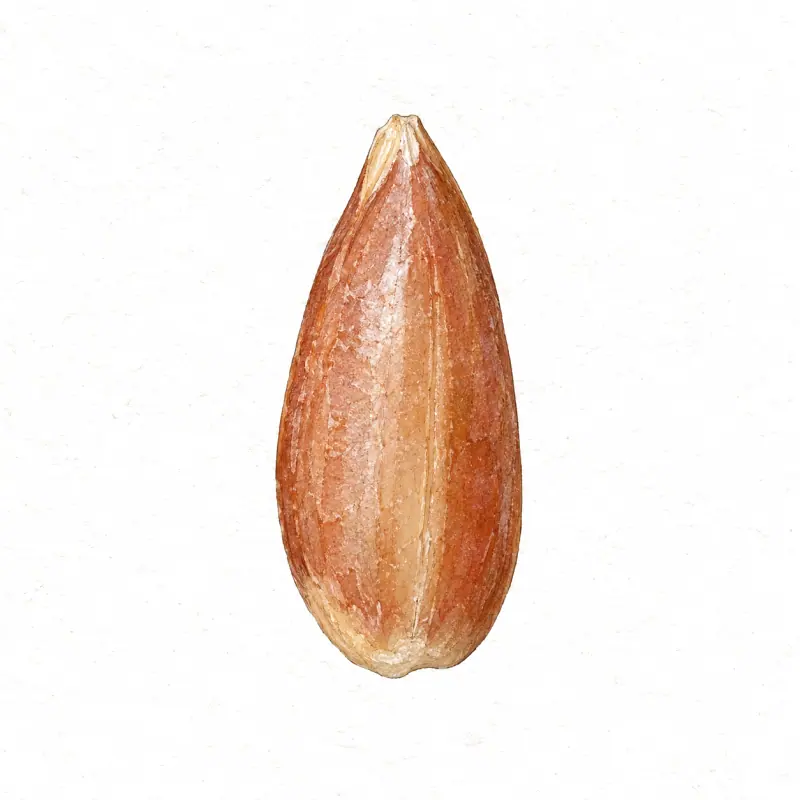
Wheat and barley in the Fertile Crescent
FAO defines cereals as plants "generally of the gramineous family", the grasses, grown for their dry grain. The first grasses to become crops were wheat and barley in the Fertile Crescent, the arc of hill country from the Levant through south-eastern Anatolia to the Zagros mountains of Iran. Zeder's review of the evidence (2008) shows that people were managing wild cereals there from at least 12,000 years ago. The clearest physical sign of domestication, an ear that keeps its grain at harvest instead of scattering it, was not well established until about 10,500 years ago, and farming economies built on crops and livestock together only took shape around 9,500 to 9,000 years ago. All these dates are calibrated radiocarbon years.
The change was slow. At Chogha Golan, in the Zagros foothills of western Iran, Riehl and colleagues found a long sequence in which people lived on wild cereals and pulses, then grew barley more and more intensively until it approached domestication, and later used domesticated emmer wheat. Their results support a model in which domestication took up to 2,000 years, though they note that other scholars argue for a faster process. Seafaring farmers carried the new crops abroad early: wells on Cyprus, dated between 10,500 and 9,000 years ago, held domesticated einkorn and emmer wheat, barley and lentils. Genetic studies have ruled out a European origin for wheat and barley.
Maize from teosinte
Maize does not look like its wild ancestor. Teosinte, a wild grass of Mexico and Central America, encloses each kernel in a hard fruitcase; the gene that controls this casing, teosinte glume architecture 1, is one of the major domestication genes of maize. In 2002 Matsuoka, Doebley and colleagues genotyped 264 plants at 99 genetic markers and concluded that all maize arose from a single domestication in southern Mexico about 9,000 years ago.
Where in southern Mexico is less settled. Matsuoka's team found that the oldest surviving maize types are those of the Mexican highlands. The wild ancestor, Balsas teosinte (Zea mays ssp. parviglumis), grows lower down, in the seasonal tropical forest of the Balsas river valley. In 2009 Piperno and colleagues analysed grinding stones from the Xihuatoxtla rock shelter in Guerrero. Maize made up 90 % of the starch grains on the tools, and maize phytoliths were present by 8,700 years ago. That is 2,500 years earlier than any maize from the dry highlands, and the authors read it as support for an origin in the lowland Balsas valley. Maize is now the world's largest cereal crop: 1.22 billion tonnes in 2024, according to FAO. It is the base of polenta and of American bourbon.
Millets, sorghum and two rices
"Millet" is not one plant. FAO's list of millets covers a large number of different botanical species, from proso and foxtail millet to finger millet, teff and pearl millet. In northern China, storage pits at Cishan in Hebei held husks and chemical traces of common (broomcorn) millet dated between about 10,300 and 8,700 years ago, according to Lu and colleagues. Foxtail millet appears there only after about 8,700 years ago. Common millet tolerates drought well, and it was the earliest dry-farming crop in East Asia. Rice belongs to the same story; its early domestication on the Lower Yangtze and the separate African rice, *Oryza glaberrima*, have their own pages in the Rice atlas.
Africa domesticated its own summer-rain cereals. Impressions of chaff in pottery of the Butana Group, in eastern Sudan, show sorghum being cultivated, with some domestication traits, in the fourth millennium BC. Fully domesticated pearl millet appears in south-eastern Mali as early as 2500 BC and unambiguously by 2000 BC. A genome study (Burgarella et al. 2018) places pearl millet's origin in the western Sahara and dates the start of its expansion to about 4,900 years ago. Both crops were established in India between 4,000 and 3,500 years ago; Winchell and colleagues propose that they travelled through eastern Sudan and the trade of the Red Sea and the Indian Ocean.
Rye and oats: weeds that became crops
Rye and oats came into farming by a side door. The botanist Nikolai Vavilov called them "secondary" crops. In the 1920s he saw that in the mountains of Afghanistan and Central Asia, rye grew as a weed in winter wheat; higher up it became a highly competitive weed, and above the altitude where wheat would grow, rye was the crop. Fuller and colleagues (2025) describe this as a "segetal" pathway, from weed of the field to crop. Genomic studies support rye's descent from a weedy form. Weedy rye probably spread from Anatolia into Europe with the first farmers, more than 6,000 years ago, but there is little evidence of domesticated rye before the late Iron Age or the Roman period, and the authors think its domestication plausibly began in western Europe about 2,500 to 2,000 years ago.
Oats followed a similar path, and in more than one place: the segetal crops include Avena sativa in Europe, A. chinensis in China and A. abyssinica in Ethiopia. Both crops suited land where wheat struggled. FAO describes rye as tolerant of poor soils, high latitudes and high altitudes, and still used for bread, whisky and beer.
Pseudocereals: grain that is not grass
Quinoa, amaranth and buckwheat are eaten like cereals but are not grasses. Botanists call them pseudocereals. FAO's commodity list places buckwheat (Fagopyrum esculentum, of the dock family Polygonaceae) among the cereals while noting that it "does not belong to the gramineous family", and lists quinoa (Chenopodium quinoa, of the goosefoot family) as a minor cereal grown mainly in the Andean countries. Their appeal today is their hardiness: a 2026 editorial describes them as tolerant of drought, heat and poor soils and highly nutritious.
Each has its own history. On the Altiplano around Lake Titicaca, at about 3,800 m, quinoa was cultivated during the Terminal Archaic period, between about 5,300 and 3,500 years ago; the earliest seeds with domestic traits come from the site of Jiskairumoko. A genome study of 567 samples of Tartary buckwheat (He et al. 2024) traces that crop to the Himalayan region, finds that it spread south-west in China possibly with the Yi people, and that it reached Europe with the expansion of the Mongol Empire. We have not yet found a source of the required standard for the origins of amaranth.
The Green Revolution
In the 1940s and 1950s the American plant scientist Norman Borlaug worked in Mexico to make the country self-sufficient in grain. He bred a robust dwarf wheat suited to Mexican conditions, and by 1956 Mexico was self-sufficient in wheat. In the mid-1960s he introduced dwarf wheat into India and Pakistan, and in 1970 he received the Nobel Peace Prize "for having given a well-founded hope - the green revolution". The Nobel Foundation notes that he always said he was only part of a team.
The economist Pingali dates the first Green Revolution to 1966-1985. It rested on public plant breeding: wheat at CIMMYT in Mexico, rice at IRRI in the Philippines, and the CGIAR network of research centres that shared breeding lines freely. Over 50 years, while the population of the developing world more than doubled, its cereal production tripled with only 30 % more cultivated land. Between 1960 and 2000 average yields in developing countries rose 208 % for wheat, 109 % for rice and 157 % for maize. By 1998 modern varieties covered 82 % of the area in Asia but only 27 % in Africa.
Pingali is equally clear about the limits. Subsidised fertiliser, pesticides and water encouraged overuse, with serious damage to water supplies and soils and chemical runoff. Rain-fed and marginal areas gained much less: in dry areas new wheat varieties often raised yields by no more than 10 %. In India, policies that favoured staple cereals crowded out pulses, and pulse consumption fell. In 2024 the world harvested 3.1 billion tonnes of cereals, including 820 million tonnes of rice and 798 million tonnes of wheat.
How it connects
Ingredient
- related Barley
Style
- related Bourbon whiskey
- related Rye whisky (United States)
Place
- related Lower Yangtze In preparation
Rice
- related African rice (Oryza glaberrima)
Recipe
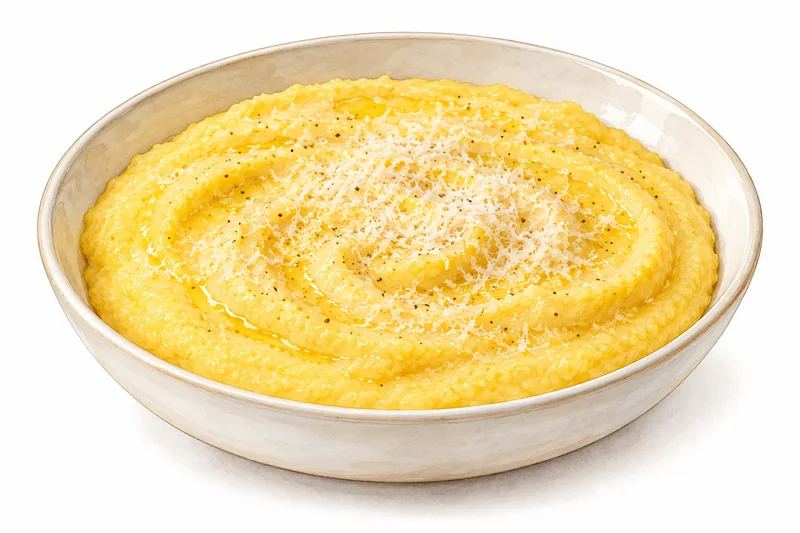
- related Soft polenta
- related Steamed couscous
Continue exploring
- CountryTurkey8 entries in the atlas so far
- IngredientBarleyHordeum vulgare
- StyleBourbon whiskeyLegal category
- RecipeSoft polentaNorthern Italy, Italy
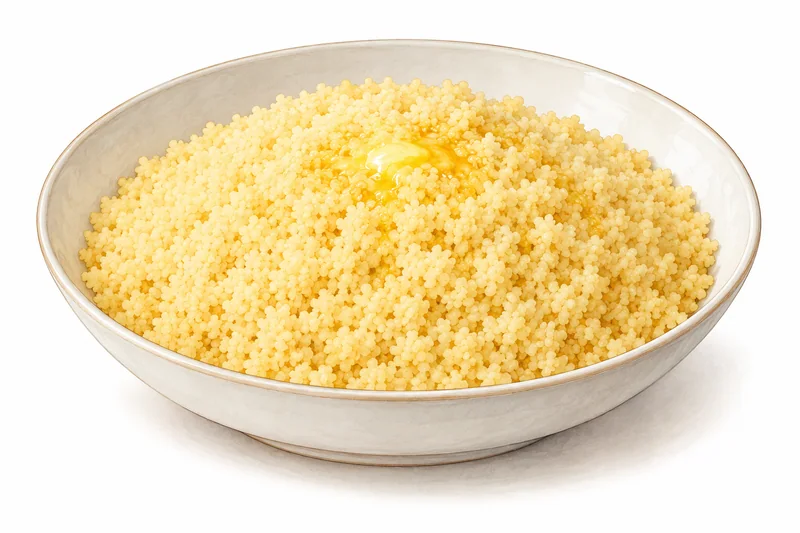 RecipeSteamed couscousMaghreb, Morocco
- StoryLegumes: lentils, beans and the plants that feed the soilTurkey
- StoryMeat and butchery: from the first herds to the packing houseUnited States of America
- StoryRoots and tubers: cassava, sweet potato, yam, taro and the Andean cropsPapua New Guinea
- RiceAfrican rice (Oryza glaberrima)Inland Niger Delta, Mali
- StyleRye whisky (United States)Legal category