Pasta · Myths & evidence · Reference page
Did Marco Polo bring pasta to Italy?
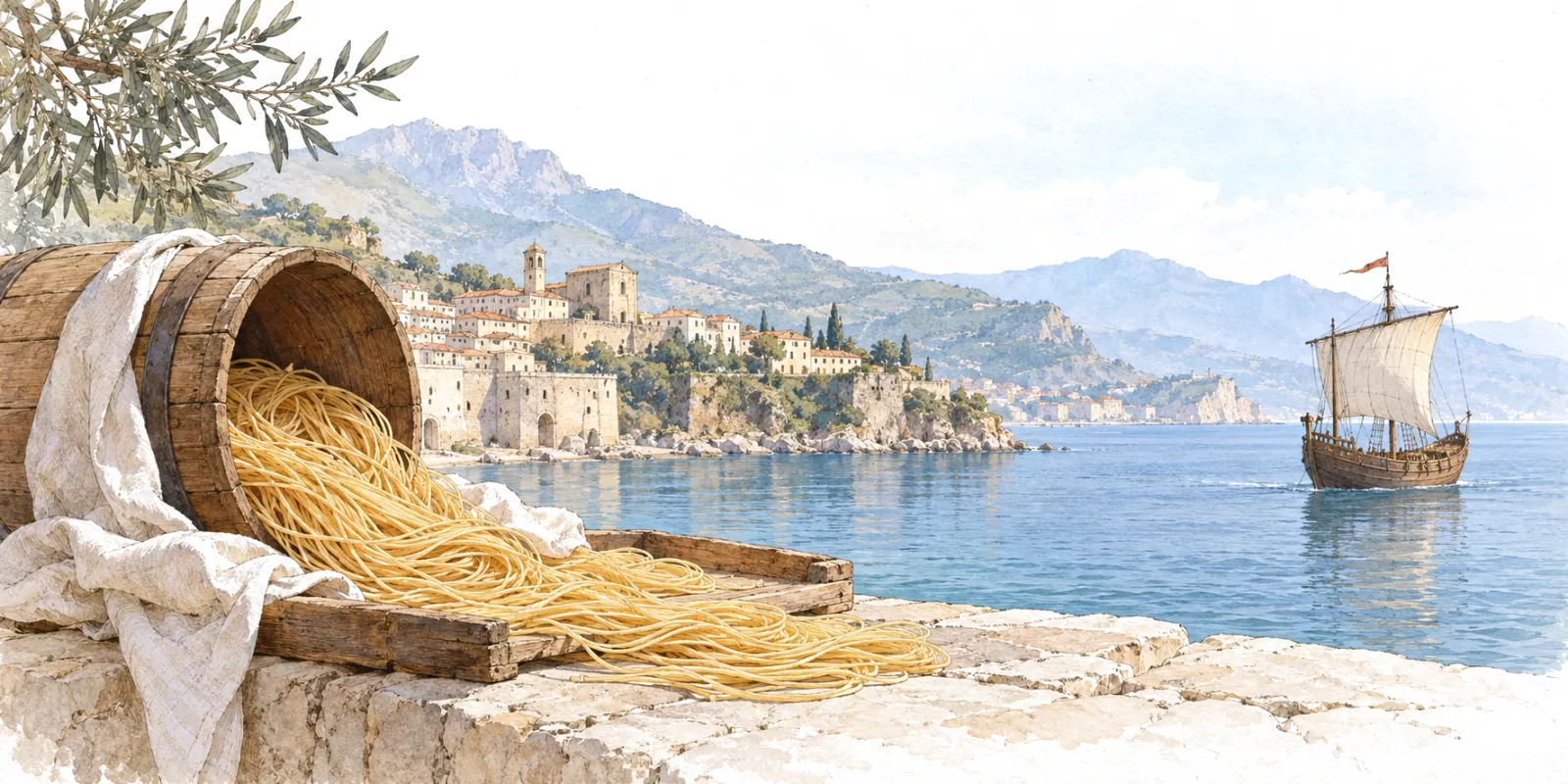
No. Dried pasta was being made and exported from Sicily more than a century before Marco Polo came home from China in 1295. How the myth began says more about twentieth-century marketing than about medieval trade.
The legend
The story goes that the Venetian traveller returned from the court of Kublai Khan with noodles, and Italy learned to make pasta. It is charming, endlessly repeated, and contradicted by the documents.
The evidence
In 1154 — a century before Marco Polo was born — the geographer al-Idrisi described Trabia in Sicily as a place where itriyya, a dried pasta that later sources describe as string-like, was made in such quantity that it was shipped across the sea to Calabria and other Muslim and Christian lands. A Genoese notarial inventory of 1279, listing the estate of a soldier, Ponzio Bastone, records a barrel of macaroni.
The one passage in Marco Polo's book usually cited is about Sumatra, not China: the sago "flour" from a palm tree, which in Ramusio's 1559 edition is said to be made into pasta "in strips and other forms". The food is described in terms of one already familiar in Italy, not presented as something new.
Historians of pasta such as Silvano Serventi and Françoise Sabban trace two separate traditions: Chinese noodles, with a very long history of their own, and a Mediterranean tradition of dried durum-wheat pasta with roots in the Greco-Roman and Arab worlds. Both are ancient; neither needed the other.
Where the myth came from
The tale gained its popular form in the twentieth century; food historians commonly trace it to a 1929 article in The New Macaroni Journal, the trade magazine of the US macaroni manufacturers' association, which presented an embellished story of Marco Polo and noodles. It is a useful reminder for this atlas: an attractive story is not a source.
How it connects
Pasta shape
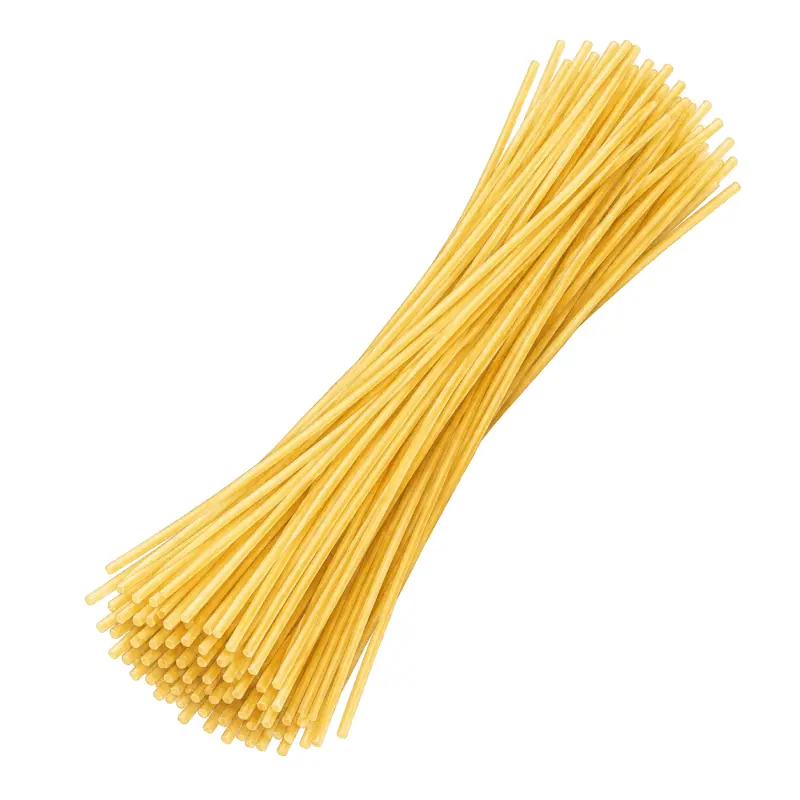
- related Spaghetti
Place
- origin Trabia, Sicily In preparation
Continue exploring
- CountryItaly107 entries in the atlas so far
 Pasta shapeSpaghettiGragnano, Italy
 RecipeSpaghetti all'amatricianaAmatrice, Italy
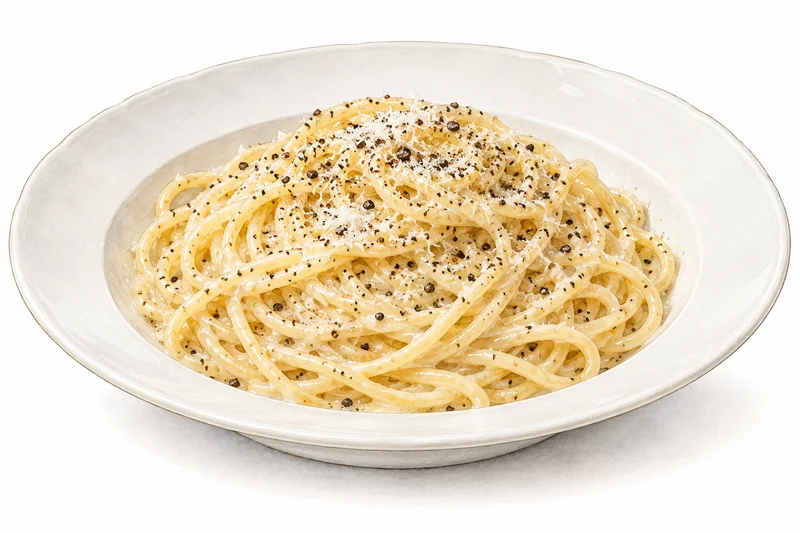 RecipeCacio e pepeRome, Italy
- RecipeLinguine alle vongoleItaly
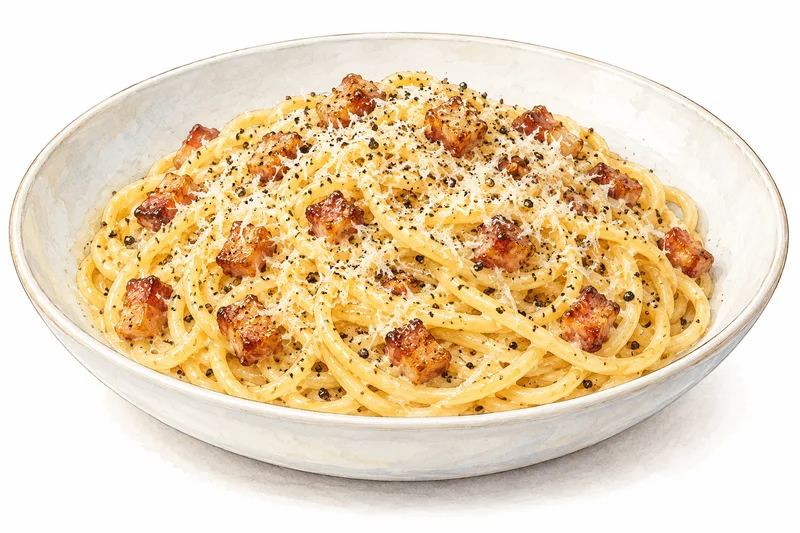 RecipeSpaghetti alla carbonaraRome, Italy
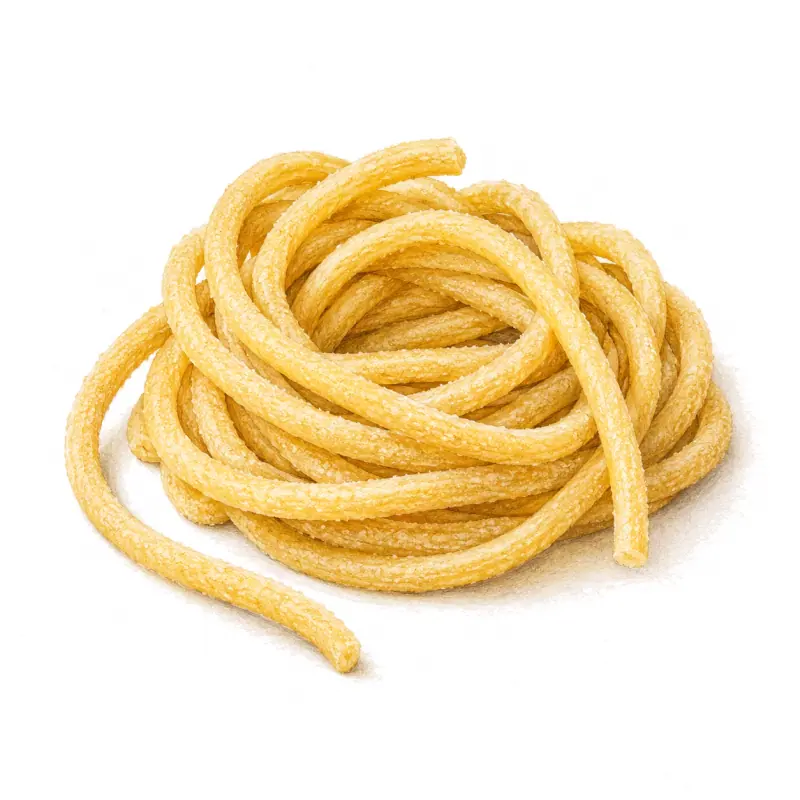 Pasta shapeBigoliPadua, Italy
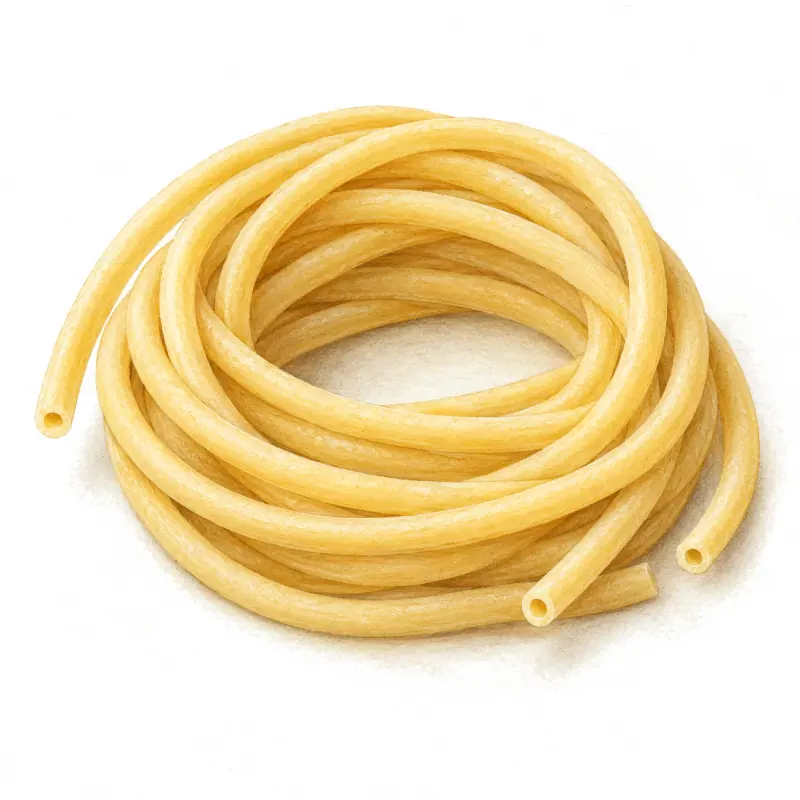 Pasta shapeBucatini
 Pasta shapeCapellini
 Pasta shapeLinguine